


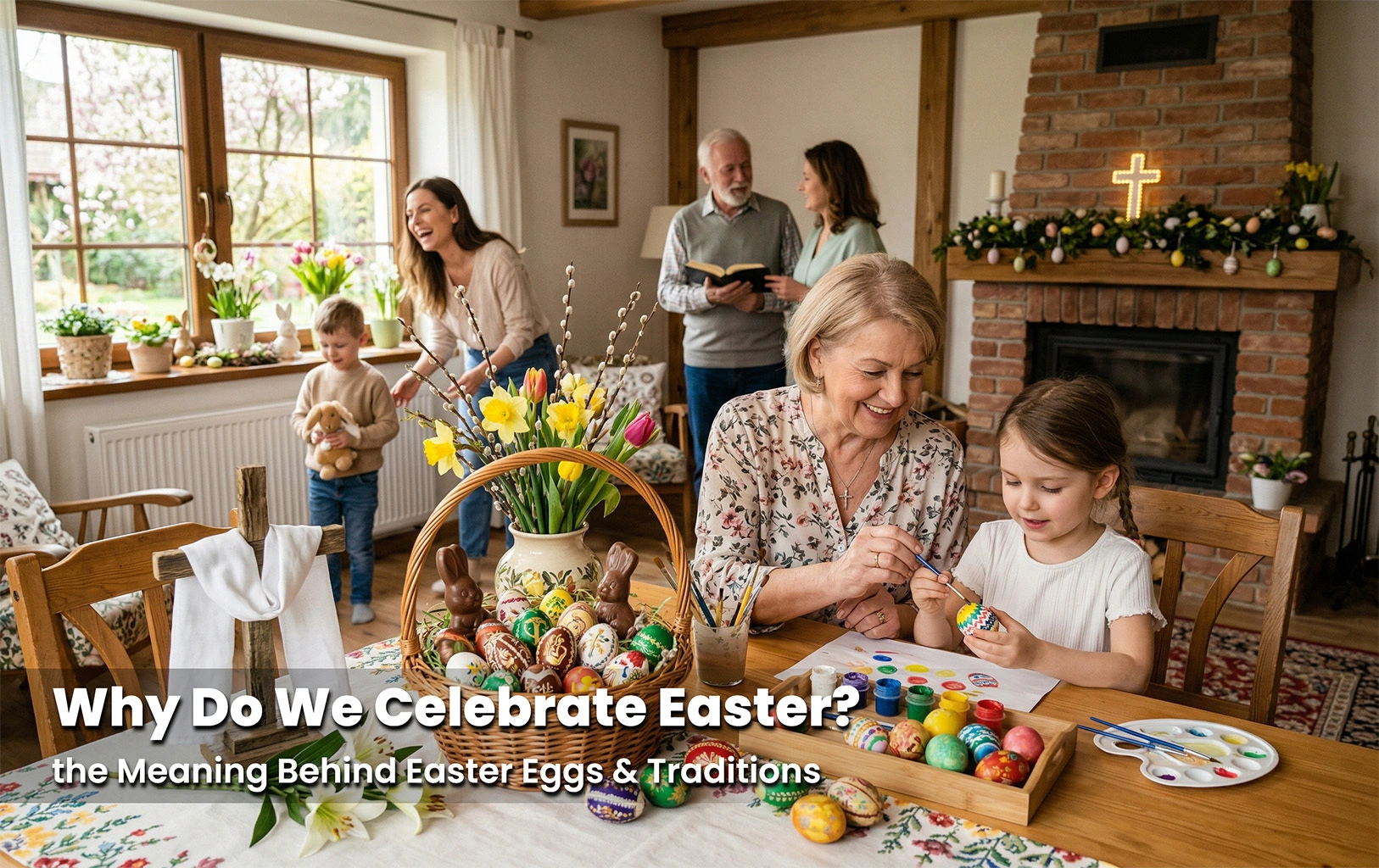
Why Do We Celebrate Easter

Why Do We Celebrate Easter? The Meaning Behind Easter Eggs & Traditions
Easter is among the most significant holidays in the Christian calendar. Easter is a time of faith, family, hope, and new beginnings for millions of people all over the world. It is also a colourful season, full of eggs, chocolates, Easter bunnies, church services, feasts, and pleasant customs.
But have you ever felt like asking why we have Easter, why we have Easter eggs, or why the Easter bunny should have been included in the tradition?
Though a lot of people like Easter because of its sweets and the spirit of the festival, there is a history and religious belief behind the festivities. We are going to discuss the actual definition of Easter, the origin of Easter eggs, and the interesting tradition that keeps Easter special in 2026 in this guide.
What Is Easter?
Easter is a Christian festival that commemorates the resurrection of Jesus Christ. The Christian people believe that on Good Friday, Jesus was crucified and resurrected three days later, on Easter Sunday.
The resurrection of Jesus symbolises:
- Hope
- New life
- Renewal
- Victory over death
- Faith and forgiveness
To the Christians, Easter is regarded as more significant than Christmas since it is the basis of the Christian faith.
Each year, Easter comes in between late in March and April. The Easter Sunday of 2026 will be on April 5.
Why Do We Celebrate Easter?
Easter is celebrated because people have to remember that Jesus Christ has been resurrected, and that is the message of hope that comes with it. Easter is the day to think about love, sacrifice, and a new beginning.
Easter is also a family time when so many families gather together, go to church, dine together, and rejoice in the spring.
Now Easter is celebrated differently worldwide:
- The Christians go to the church and pray.
- Easter eggs and presents are exchanged between families.
- Easter egg hunts are enjoyed by children.
- Bakeries make Easter cakes, hot cross buns, and sweet cakes.
- Easter dinners and Easter brunches are held by friends and families.
Despite the fact that the religious connotation has been at the core of Easter, there are numerous contemporary traditions that have been incorporated throughout the years.
The Religious Meaning of Easter
The Easter story starts within the Holy Week, the week before Easter Sunday.
Holy Week includes:
Palm Sunday
Palm Sunday is a memory of the day when Jesus entered Jerusalem and was greeted by people who were waving palm leaves.
Maundy Thursday
Maundy Thursday is the Last Supper of Jesus with his disciples.
Good Friday
The crucifixion and death of Jesus Christ are commemorated in Good Friday.
Easter Sunday
Easter Sunday is a celebration of the resurrection of Jesus and the faith that he has come back to life.
That is why Easter is regarded as a light-after-darkness and hope-after-sadness celebration.
Why Are Easter Eggs Part of Easter?
Easter eggs are among the most common Easter symbols but most people are not aware of the origin of the tradition.
Eggs have been traditionally regarded as a life, birth, and new beginning. Due to Easter being a holiday that celebrates the resurrection and the beginning of a new life, the eggs were the best representation of the holiday.
Early Christians used to paint eggs and present them as gifts in order to signify the empty tomb of Jesus and a new life.
In the course of time, this tradition was transformed into the colourful Easter eggs, which we nowadays have.
The Easter eggs connotation includes:
- New beginnings
- Life and rebirth
- The resurrection of Jesus
- Spring and renewal
Today, Easter eggs can be:
- Eggs painted in vivid colours.
- Chocolate eggs
- Marzipan eggs
- Easter decorations: decorative eggs.
- Surprise eggs containing gifts or sweets.
Why Are Easter Eggs Coloured?
Easter egg colouring started many centuries ago. Initially, they used to colour eggs with red colour in order to signify the blood of Jesus Christ.
Due to an increase in the merry and artistic aspects of Easter celebrations, people started adorning eggs using various colours, designs, flowers, and symbols.
The colours of popular Easter eggs nowadays bear another meaning:
- Red is a representation of sacrifice and love.
- White is the colour of innocence and tranquillity.
- Yellow is a sign of joy and the sun.
- Green is a symbol of growth and spring.
- The colour purple is also perceived as a symbol of faith and royalty.
- Pink and pastel colours also represent happiness and festivity.
One of the trendiest pastel Easter eggs is still used in 2026 in Easter decorations and desserts.
Where Did the Easter Bunny Come From?
Another well-known Easter tradition is the Easter bunny, especially among children. The Easter Bunny, however, does not have its beginnings in the bible like Easter eggs.
The Easter Bunny is said to have been established in Germany many years ago. As has been the tradition, a magical rabbit would deliver eggs and treats to well-behaved children on Easter.
The tradition was later introduced to other countries by German immigrants, particularly the United States, where it gained massive popularity.
It happened that the rabbit was included in Easter due to the fact that rabbits are often linked with:
- Springtime
- Fertility
- Growth
- New life
As time passed, the Easter Bunny was a fun aspect of Easter celebrations as seen in:
- Easter egg hunts
- Easter greeting cards
- Cakes and chocolates
- Decorations and gifts
Children nowadays tend to leave baskets for the Easter bunny in order to have sweets, eggs and little gifts in them.
Why Do We Have Easter Egg Hunts?
Easter egg hunting is among the best Easter practices among children. In an Easter egg hunt, adults hide the eggs in the house or the garden, and children hunt for the eggs.
The custom started due to the fact that eggs could be regarded as some hidden gifts and new life.
As the years went by, Easter egg hunts grew into a nice family affair. Nowadays, Easter egg hunts can involve:
- Chocolate eggs
- Decorative eggs
- Small toys and gifts
- Prizes in the form of golden eggs.
Most communities, schools, churches, and parks are currently hosting massive Easter egg hunts annually.
Why Do We Eat Hot Cross Buns at Easter?
Among the oldest traditions of food during Easter are the hot cross buns. They are either spiced, dried fruit, or cross-topped sweet buns.
The cross of the bun reflects the crucifixion of Jesus Christ, and the spices can be said to reflect the spices that were used after the death of Jesus.
Hot cross buns are a traditional food eaten during Good Friday, but nowadays this is during the Easter period.
Hot cross buns are now offered in various flavours and include:
- Classic raisin and cinnamon.
- Chocolate chip
- Orange and cranberry
- Salted caramel
- Coffee and chocolate
Although new flavours are now much more popular, the original meaning of hot cross buns is relevant.
Easter Traditions Around the World
Each country observes Easter in a different manner. Although the definition of Easter is still the same, the traditions may differ.
Easter in the United Kingdom
U.K. Easter is celebrated in the form of chocolate eggs, church services, hot cross buns, and family meals.
Easter in the United States
Easter in the United States is celebrated with Easter bunnies, egg hunts, chocolates, and parades.
Easter in Germany
Germany is known to have colourful Easter trees with hanging eggs.
Easter in Greece
In Greece, red Easter eggs are particularly essential and are used in traditional Easter games.
Easter in India
Christians in India mark Easter in church, praying, eating sweets and spending time together in the family. Easter is celebrated by eating festive meals, cakes, and also community gatherings in such places as Goa, Kerala, and some parts of Karnataka.
Modern Easter Traditions in 2026
Although Easter is a religious holiday, the contemporary practices keep on increasing with the passing of years. The trends in Easter in 2026 are some of the largest:
- Luxury chocolate Easter eggs.
- Individually customised Easter gift boxes.
- Cakes and desserts of bunnies.
- Easter brunch parties
- Pastel decorations
- Easter dessert tables
- Eco-friendly Easter baskets
- Customised eggs and homemade sweets.
Other new family traditions include baking, home decorating, Easter eggs, and giving customised sweet treats.
The Real Meaning Behind Easter Traditions
Despite the abundance of colourful eggs, chocolates, cakes, and fun activities, all traditions have one main theme, namely, the fresh life and hope.
Easter eggs are rebirths.
The Easter bunny is a representation of life and spring.
Hot cross buns make us think of Good Friday.
Hope and resurrection are celebrated during Easter Sunday.
The traditions have been transmissible through generations since they have united the people and turned Easter into a happy and significant occasion.
Final Thoughts
Easter is not all about chocolate eggs and candy. It is a festival of confidence, hope, rebirth, and family.
No matter what you celebrate Easter because of its religious significance or simply because it is a family tradition, it is even more valuable to know what was behind Easter eggs, Easter bunny, hot cross buns, and other traditions.
With Easter 2026 coming, it is the ideal moment to make new memories, enjoy meaningful traditions, and have the joy of new beginnings.