


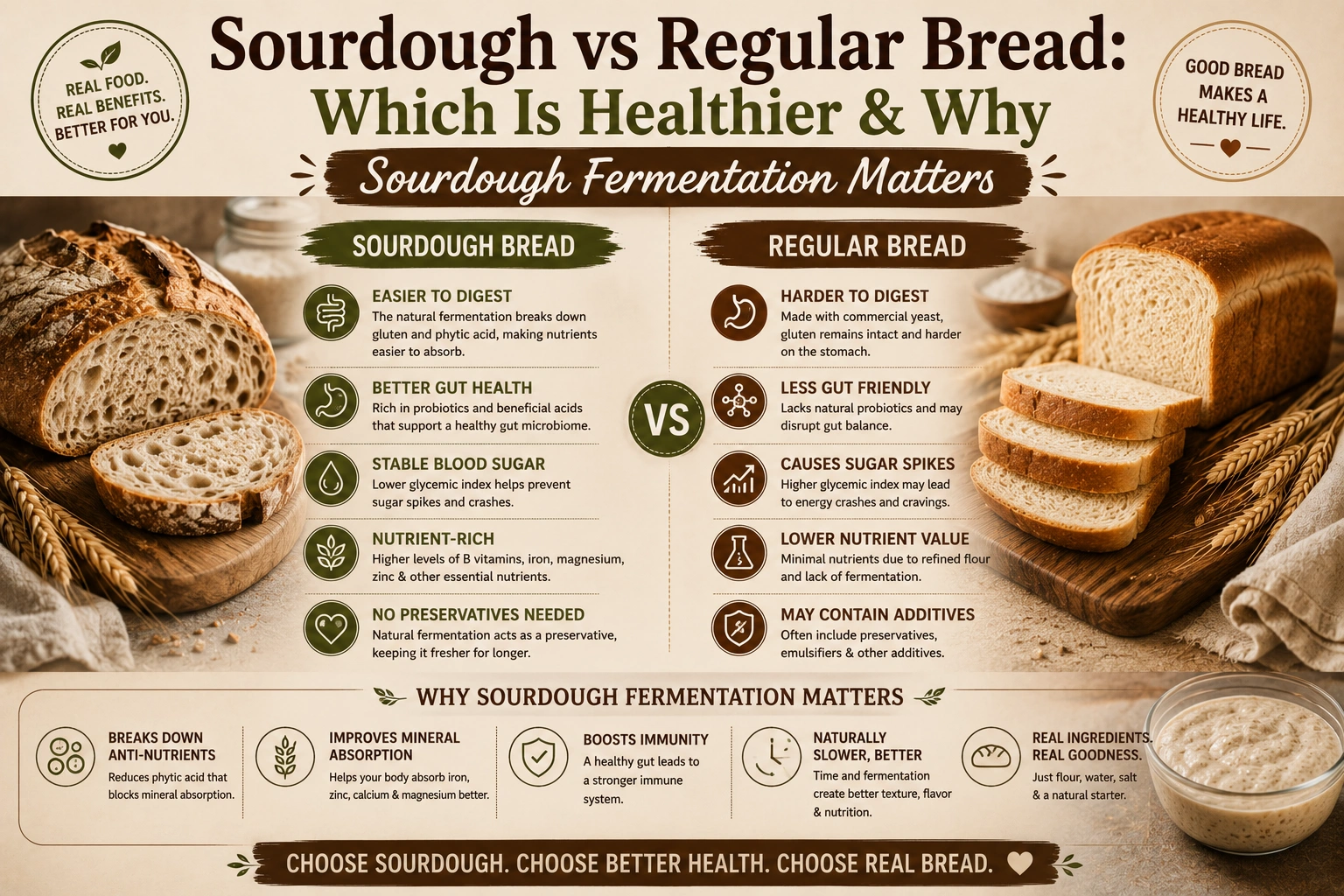
Sourdough vs Regular Bread: Which Is Healthier & Why Sourdough Fermentation Matters

Bread has a rich and complex history dating back thousands of years, and it continues to adapt as technology and cooking practices evolve. While options were once more limited, people can now find an incredible variety of bread at stores and bakeries, including standard white and whole wheat loaves and artistic interpretations of sourdough bread. With health consciousness on the rise, people are wondering, how can sourdough bread be better for you than regular bread?
This question depends primarily on how the bread was produced. Though both regular and sourdough bread have a place in a balanced diet, sourdough offers properties that make it unique from its non-sourdough counterparts. Sourdough has been praised for its ability to aid in digestion, its unique flavor, its traditional methods of preparation, and fermentation processes, making it one of the most in-demand artisan loaves today.
At Goldline Breadz, we care about preserving authentic baking methods while producing excellent taste and quality, understanding the difference between regular and sourdough bread can allow you to know how to select which of your daily loaves you should enjoy.
Understanding the Basics of Sourdough Bread
Sourdough is the most primitive way of making bread known to humans. For a long time, when yeast sold in the market did not exist, bread would raise naturally due to fermentation.
Sourdough starter is a live culture that contains naturally existing wild yeast and good bacteria. Sourdough starter would ferment the bread for a long time, which would develop the wonderful flavor, texture, and smell of sourdough.
Compared to regular bread that uses commercial baker’s yeast, which is good at rising the bread quickly, sourdough has a longer fermentation process, which is an important factor for the properties that sourdough possesses.
Artisan bakers are the ones who love sourdough and continue the traditional way of baking bread using high-quality ingredients and craftsmanship.
How Regular Bread Is Typically Made
The majority of bread we find on the shelves of supermarkets or commercial bakeries relies on commercial yeast to raise the dough. This technique is extremely efficient, providing speedy, consistent production.
Commercial yeast hastens the leavening time considerably, making production much faster. However, although the technique is largely responsible for the accessibility and affordability of regular bread, it lacks the extended fermentation that sourdough can enjoy.
Even so, regular bread can still be highly beneficial and a delight to eat when it has been made with the highest quality ingredients. However, it differs from sourdough clearly due to the distinct production process and subsequent variations in taste, texture and baking attributes.
It is these differences that must be weighed when comparing the perceived benefits between sourdough and regular bread.
The Science Behind Sourdough Fermentation
The key thing about sourdough bread is its fermentation process. Microorganisms, that are naturally present, interact with the dough creating products that improve texture and flavour.
This process, over a number of hours, slowly allows the dough to age, and as fermentation develops, the microorganisms within the flour begin to convert some of the flour components into compounds that result in that authentic sourdough tanginess.
The rise process isn’t the main thing when talking about fermentation. It’s a very complicated natural process, transforming the dough and making it very different from “normal” bread.
Many traditional bakers regard this part of bread-making as one of the most important in producing artisan bread.
Sourdough and Digestibility
One of the most frequently discussed advantages of sourdough bread is its digestibility. Many bread enthusiasts report that sourdough feels lighter and easier to enjoy compared to some conventional bread products.
The fermentation process partially breaks down certain components of the flour before baking occurs. This transformation can alter the structure of the dough and contribute to the distinctive eating experience associated with sourdough.
While individual experiences may vary, the extended fermentation process remains one of the key reasons health-conscious consumers often choose sourdough over conventional bread options.
For people seeking artisan bread made using traditional methods, sourdough continues to be one of the most popular choices available.
Sourdough and Gut-Friendly Baking Traditions
Gut health has become an increasingly important topic in modern nutrition discussions. As consumers learn more about digestive wellness, many are exploring foods that align with traditional preparation methods and natural fermentation processes.
Sourdough bread is frequently highlighted because fermentation has been an integral part of its preparation for centuries. The long fermentation period contributes to the bread’s unique characteristics and distinguishes it from rapidly produced alternatives.
Although bread should always be enjoyed as part of a balanced diet, many consumers appreciate sourdough because it reflects traditional food preparation techniques that emphasize patience, craftsmanship, and natural processes.
This connection to traditional baking is one of the reasons sourdough has experienced a resurgence among health-conscious consumers worldwide.
Taste: The Difference You Can Immediately Notice
One of the easiest ways to distinguish sourdough from regular bread is through flavor. Sourdough develops a complex taste profile that many people describe as rich, mildly tangy, and deeply satisfying.
The fermentation process creates layers of flavor that are difficult to replicate using quick-rise baking methods. Each loaf develops its own character depending on fermentation time, flour selection, hydration levels, and baking techniques.
Regular bread typically offers a milder flavor and softer profile, making it suitable for many everyday applications. However, those seeking a more artisanal and flavorful bread experience often gravitate toward sourdough.
At Goldline Breadz, our sourdough loaves are crafted to highlight these distinctive flavors while maintaining a balanced and enjoyable taste.
Texture and Crust Comparison
Texture is another area where sourdough and regular bread differ significantly.
Sourdough bread is often recognized for its chewy interior and beautifully developed crust. The fermentation process contributes to a structure that many bread enthusiasts consider ideal for artisan baking.
Regular bread generally features a softer crust and more uniform crumb structure. While this texture appeals to many consumers, sourdough offers a more rustic and handcrafted experience.
These differences make each type of bread suitable for different preferences and culinary uses.
Why Traditional Baking Methods Still Matter
In today’s fast-paced world, food production often prioritizes speed and efficiency. Sourdough baking takes a different approach.
Traditional sourdough requires patience, skill, and careful attention throughout the fermentation process. Bakers must monitor the dough, manage fermentation times, and understand how environmental conditions affect the final product.
This dedication to craftsmanship is one of the reasons artisan sourdough remains highly respected among baking professionals and food enthusiasts alike.
At Goldline Breadz, we believe traditional baking techniques continue to offer exceptional value because they focus on quality rather than shortcuts.
Which Bread Is the Better Choice?
The answer depends on your personal preferences, dietary goals, and taste expectations.
Regular bread remains a convenient and versatile staple that works well for many households. It is widely available and suitable for countless everyday uses.
Sourdough, however, offers several unique qualities that appeal to consumers seeking artisan craftsmanship, traditional fermentation, distinctive flavor, and a more authentic baking experience.
Rather than viewing one as universally better than the other, it is helpful to understand what makes each type of bread unique and choose the option that best aligns with your lifestyle.
For many customers, sourdough represents a return to traditional baking values that emphasize quality, patience, and natural processes.
Why Bangalore Bread Lovers Are Choosing Sourdough
Across Bangalore, interest in artisan and fermented foods continues to grow. Consumers are increasingly looking for products that offer transparency, craftsmanship, and authentic preparation methods.
Sourdough fits perfectly within this trend. Its rich flavor, traditional production process, and artisan appeal have made it one of the most sought-after bakery products among food enthusiasts, professionals, and health-conscious families.
As awareness grows, more Bangalore residents are discovering why sourdough has remained a beloved bread choice for centuries.
Experience Authentic Sourdough at Goldline Breadz
At Goldline Breadz, we take pride in creating high-quality sourdough bread using carefully selected ingredients and traditional baking techniques. Every loaf reflects our commitment to freshness, craftsmanship, and exceptional taste.
Whether you’re new to sourdough or already a devoted fan, our artisan sourdough range offers a delicious way to experience the benefits of traditional fermentation and handcrafted baking.
From breakfast toast and gourmet sandwiches to soups, salads, and everyday meals, sourdough adds character and flavor to every occasion.
Explore Goldline Breadz’s Sourdough Range
Looking for premium sourdough bread in Bangalore? Discover the difference that traditional fermentation and artisan baking can make. Visit Goldline Breadz and explore our freshly baked sourdough collection crafted for taste, quality, and authenticity.